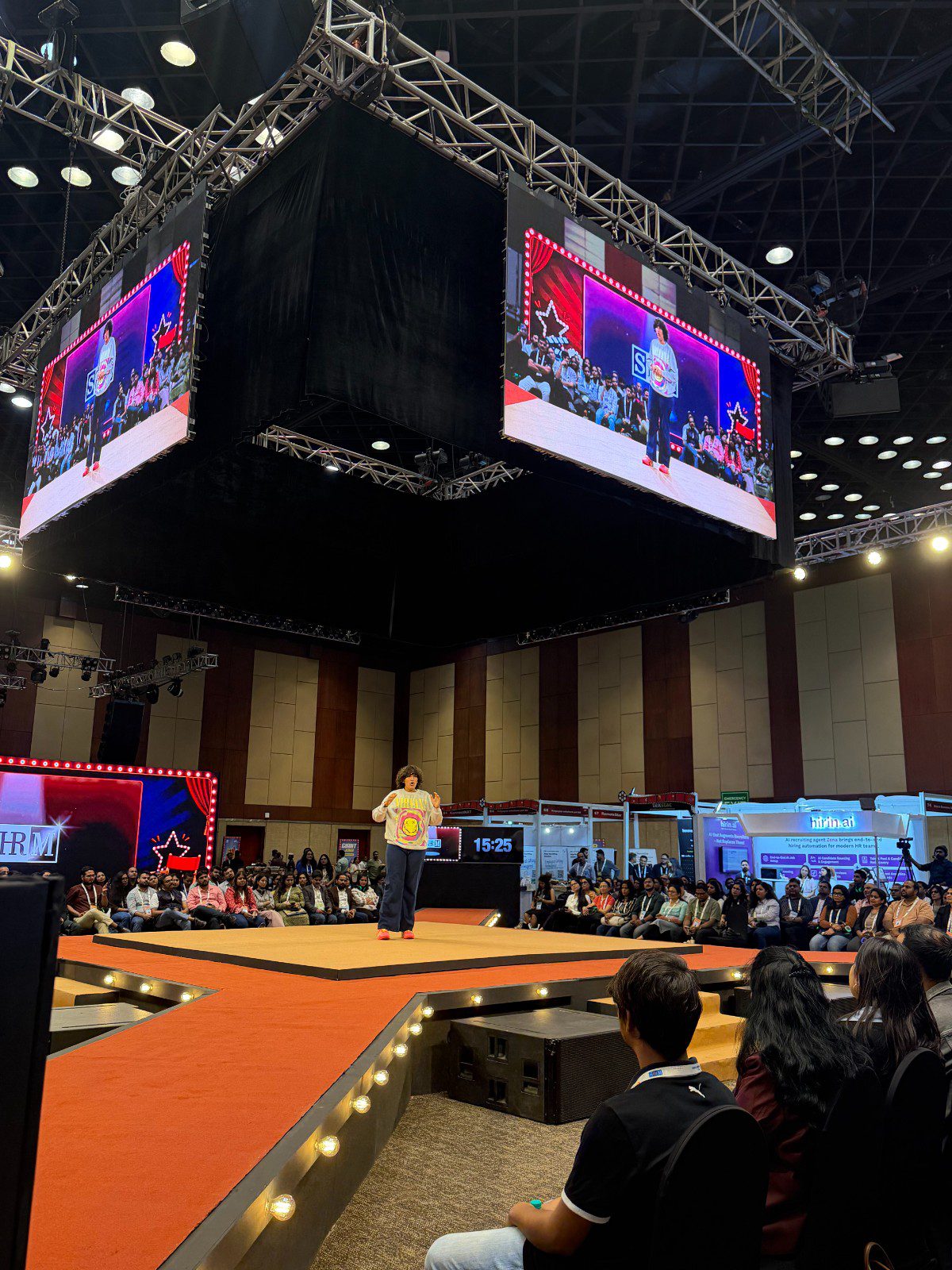

Authored by: Hiten Gautam
My Journey Towards Sustainable Innovation
Innovation often begins with a simple question: Can we create better solutions for the future?
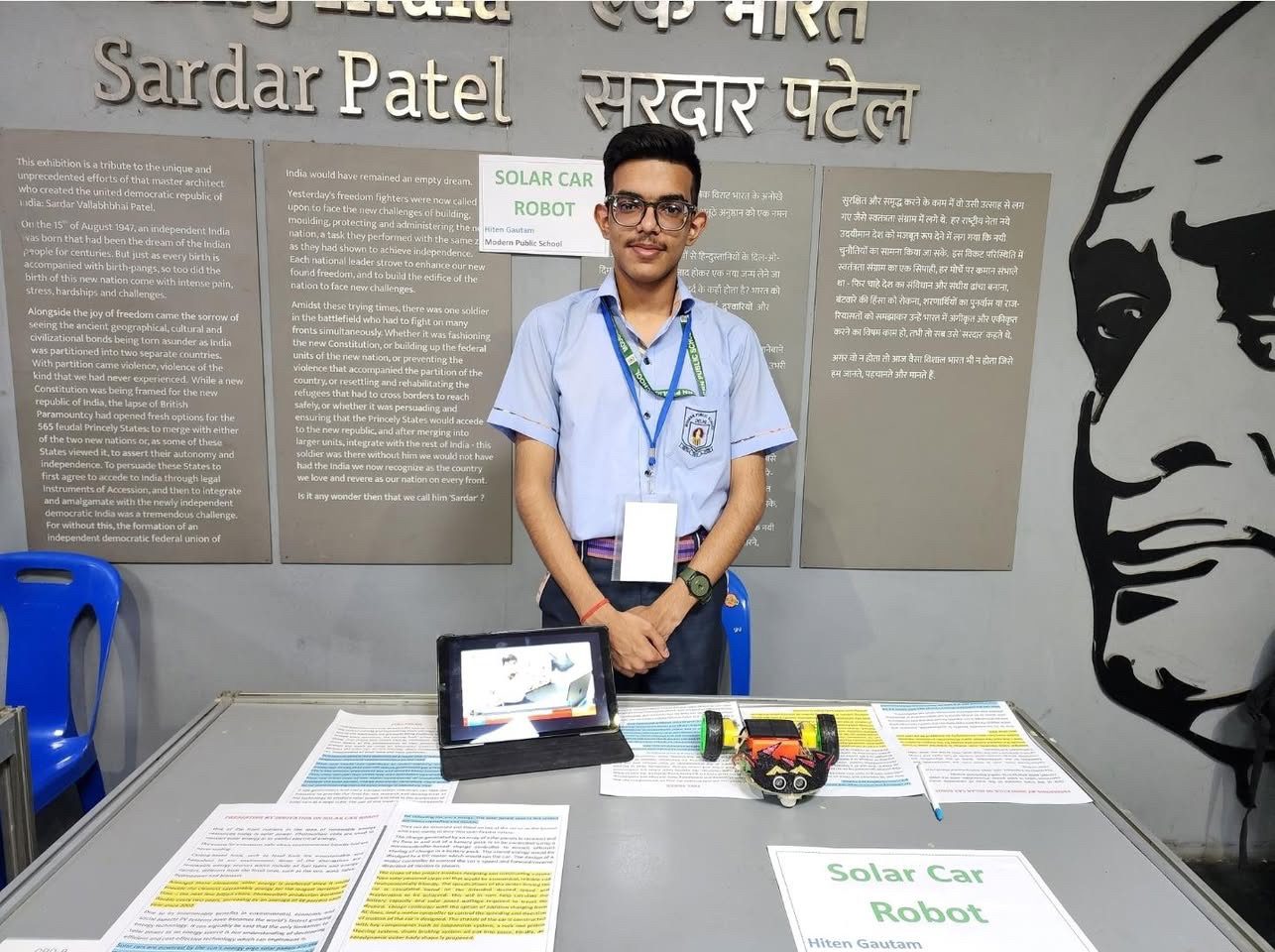
For me, that question led to the development of the Solar Car Robot, a project that explores how renewable energy can be used to power transportation systems while reducing our dependence on fossil fuels.
I am Hiten Gautam, and I am passionate about using science and technology to solve environmental challenges. Through this project, I wanted to demonstrate how solar energy can be harnessed to create cleaner, more sustainable mobility solutions.
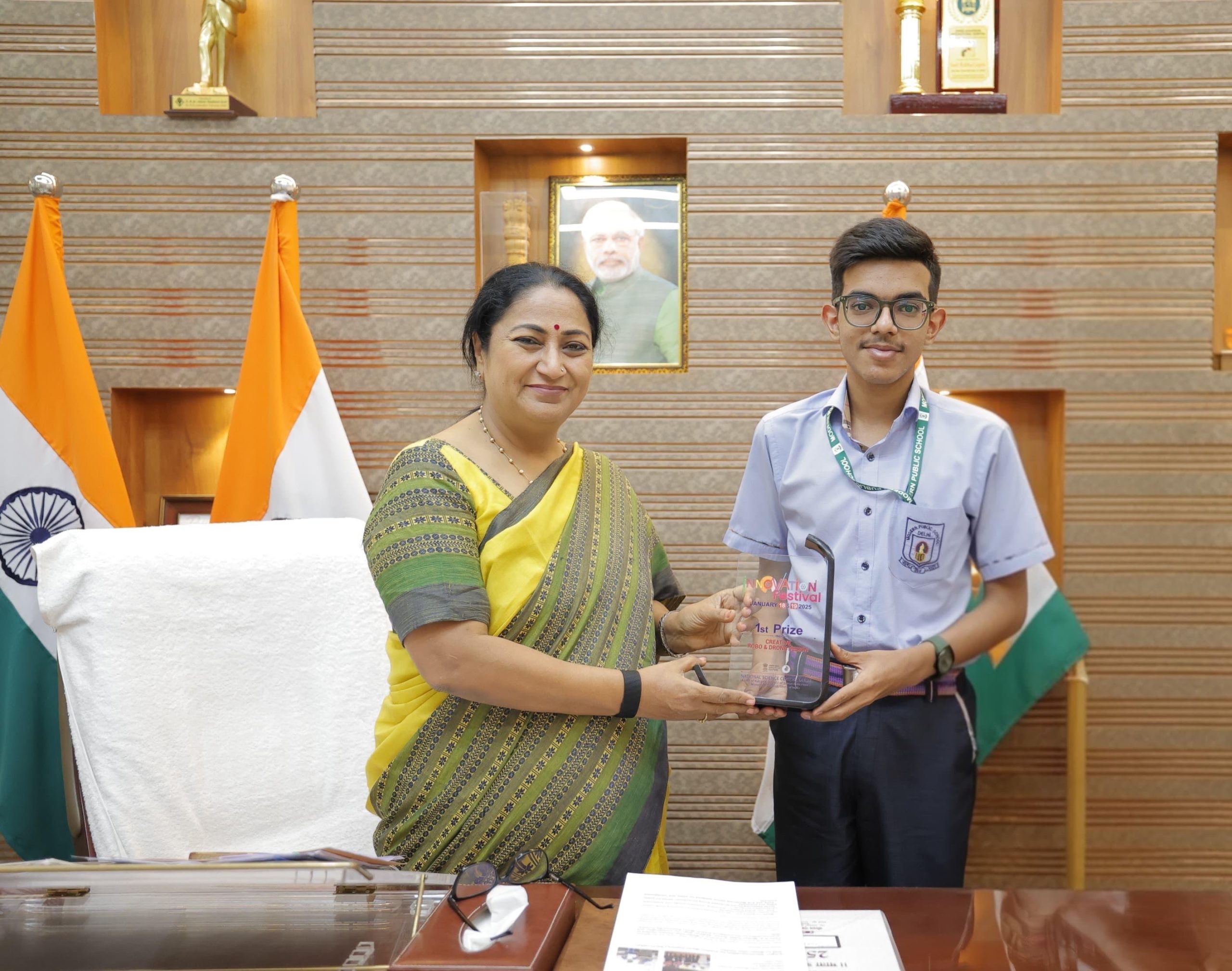
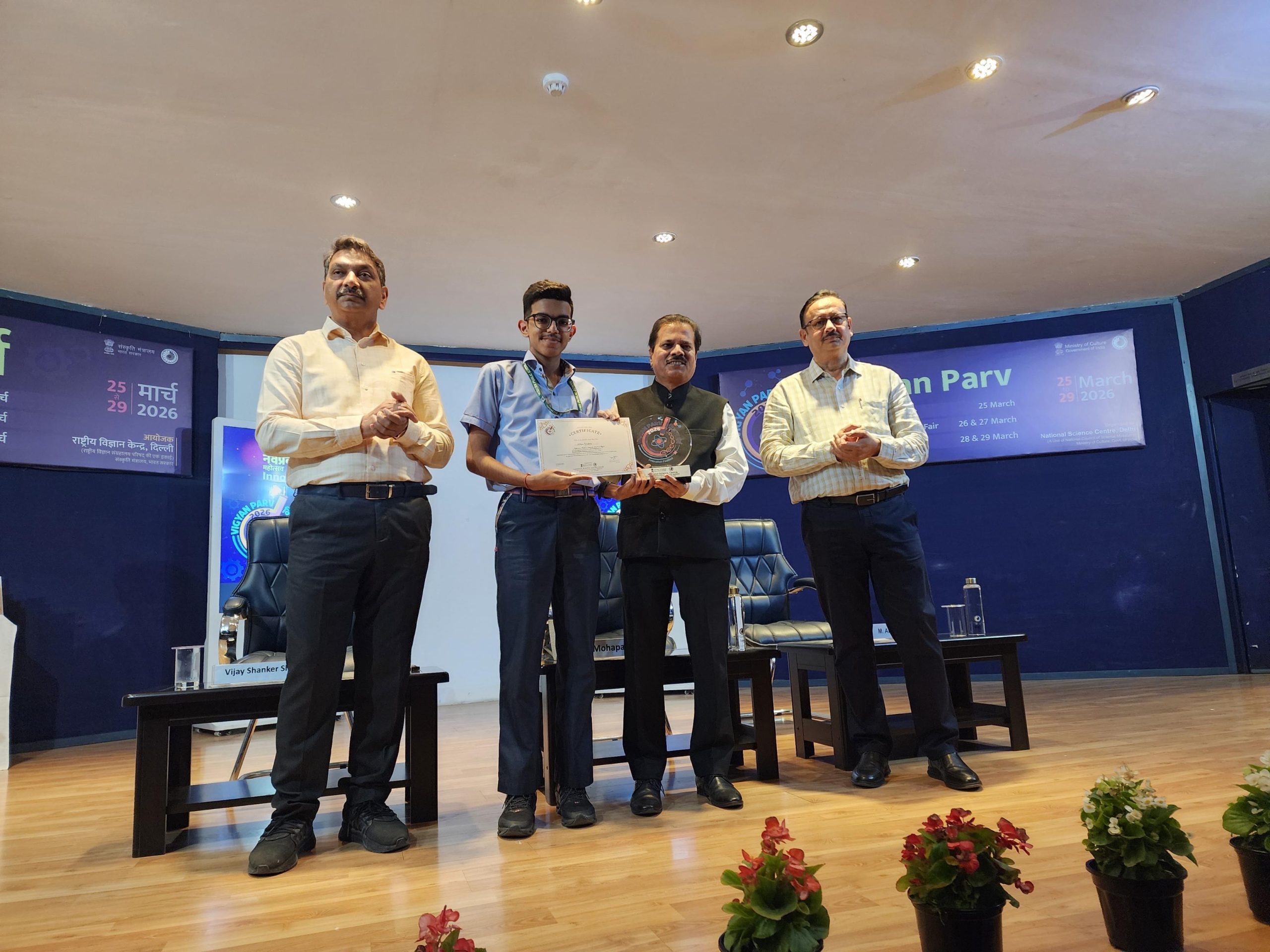
My innovation has been recognised by the National Science Centre, New Delhi, and I have also been encouraged by Delhi Chief Minister Rekha Gupta Ji for my work. These experiences have motivated me to continue exploring innovative solutions that contribute to a greener future.
Understanding the Potential of Solar Energy
One of the front-runners in the area of renewable energy resources today is solar power. Photovoltaic cells are used to convert solar energy into useful electrical energy.
The quest for a constant, safe, clean, environmentally-friendly fuel is never-ending.
Carbon-based fuels, such as fossil fuels, are unsustainable and hazardous to our environment. Some of the alternatives are renewable energy sources which include all fuel types and energy carriers, different from the fossil ones, such as the sun, wind, tides, hydropower and biomass.
Amongst these elements, solar energy is preferred since it could provide the cleanest sustainable energy for the longest duration of time – the next few billion years. Photovoltaic production doubles every two years, increasing by an average of 48 percent each year since 2002.
Due to its innumerable benefits in environmental, economic and social aspects PV systems have become the world’s fastest growing energy technology. It can arguably be said that the only limitation to solar power as an energy source is our understanding of developing efficient and cost effective technology which can implement it.
How the Solar Car Robot Works
Solar cars are powered by the sun’s energy ergo solar panels are the most important part of a solar car since they are solely responsible for collecting the sun’s energy. The solar panels used in this project are mono crystalline and flexible.
They can be mounted and fitted on top of the car or on the bonnet with ease owing to their thin semi-flexible nature.
The charge generated by an array of solar panels is received and its flow in and out of a battery pack is to be controlled using a microcontroller based charge controller to ensure efficient storing of charge in a battery pack. The stored energy would be divulged to a DC motor which would run the car. The design of a motor controller to control the car’s speed and forward/reverse direction of motion is shown
Designing a Sustainable Vehicle
The scope of the project involves designing and constructing a proto-type solar powered clean car that would be economical, reliable and environmentally friendly. The specifications of the motor driving the car is calculated based on the intended desired speed and acceleration to be achieved.
This will in turn help calculate the battery capacity and solar panel wattage required to travel the desired. A charge controller with the option of additional charging from AC lines, and a motor controller to control the speeding and direction of motion of the car is designed. The chassis of the car is constructed with key components such as suspension system, a rack and pinion steering system, drum braking system all put into place. Finally an aerodynamic outer body shape is proposed.
Why Solar-Powered Transportation Matters
Fuel-based cars not only threaten the very air we breathe in but also the cost of running and maintaining them are huge and overbearing, and as the fossil fuels are gradually being depleted, the cost of these limited scare resources, the existing fuels’ prices are continuously rising. Fuel prices and trends Clearly, individuals need to become more aware of the consequences of their actions and can help protect the earth by using an alternative method of transport, perhaps the solar car, an eco-friendly, clean, inexpensive, compact car, independent of fossil fuels and toxic emissions.
This electric vehicle may definitely be a major step in reducing traffic congestion, noise and vehicle emissions on the road.
Solar cars would not contribute to global warming or to the production of CO2. Thus this will reduce greenhouse gas emissions as CO2 is the primary greenhouse gas and thereby lower human health risks. They will cost four times less than fuel-based cars since apart from the initial cost of the major components of installation for example the solar panels, charge and motor controllers, there would be no more recurring costs as solar energy is absolutely free.
Looking Ahead
If the government and many transportation industries can take the initiative to provide the fund for the research and development of the technology to produce solar power and thus to the production of solar cars at a large scale, the use of this modern vehicle will benefit us.
This innovation journey has strengthened my belief that renewable energy can play a significant role in building a cleaner, healthier, and more sustainable future. Through projects like the Solar Car Robot, young innovators can explore practical solutions that address real-world environmental challenges while inspiring others to think differently about the future of transportation.
Hiten’s article has also been featured in – https://www.brainfeedmagazine.com/news/hiten-gautam-young-innovator-creating-solutions/6a1a948b999348d7fd546ceb
We are proud to celebrate Hiten Gautam as a member of The Green Pillar Global Tribe. Over the years, Hiten has actively engaged with our community of young changemakers, demonstrating how curiosity, innovation, and action can come together to create solutions for a better future.
Through his participation in various TGP initiatives, including the Beat The Heat Challenge, Eco Carnival workshops, and other climate learning and action programs, Hiten has consistently shown a commitment to sustainability, creativity, and environmental stewardship. His journey reflects the spirit of the Global Tribe, empowering young people to learn, act, and create meaningful impact for people and the planet.
His Solar Car Robot is a powerful reminder that age is never a barrier to making an impact. Through scientific thinking, creativity, and a passion for sustainability, Hiten is showing how young innovators can contribute towards solving some of the world’s most pressing environmental challenges.
At The Green Pillar, we believe that every young person has the potential to learn, lead, and create change. We encourage more students, researchers, innovators, and changemakers to share their ideas, build solutions, and become part of a global community working towards a more sustainable future.
Ready to join a community of young leaders creating impact for people and the planet? Join the TGP Global Tribe today:
https://thegreenpillar.com/global-tribe-2/
If you are a young innovator, researcher, or changemaker with a story to share, we’d love to hear from you. Write to us at communications@thegreenpillar.com as we continue to #HealOurEarth. 🌍